Derma Roller for Hair: Needle Size, Original vs Fake (Pakistan Buyer Guide)
Short answer: a derma roller makes tiny punctures in the scalp. Small studies suggest that microneedling combined with minoxidil may give better results than minoxidil alone for pattern hair loss. The evidence is still limited. The things that matter most are hygiene, a roller from a traceable seller, gentle technique, and not rolling on broken or infected skin. Ask a dermatologist before using long needles at home.
What microneedling does
Rolling a drum of fine needles over the scalp creates controlled micro-injuries. The theory is that the healing response, including growth factors released in the skin, stimulates follicles, and that the channels may help topical treatments absorb. Most studies on hair have been small, but several reported improvement when microneedling was added to minoxidil.
It is not a standalone cure for ganjapan, and it doesn't revive follicles in areas that are completely bald.
Needle length: the most important decision
Rollers are sold by needle length, in millimetres. Hair studies have used a range of lengths, and some used clinic devices handled by professionals.
General principles:
- Shorter needles are gentler, carry less risk of bleeding and infection, and are more suitable for home use.
- Longer needles penetrate deeper. They are more likely to cause bleeding, pain and infection, and are better left to clinics.
- The beard has thinner skin than the scalp and calls for even more caution.
If you are unsure, ask a dermatologist which length suits you. Don't assume longer means better.
Needle count and material
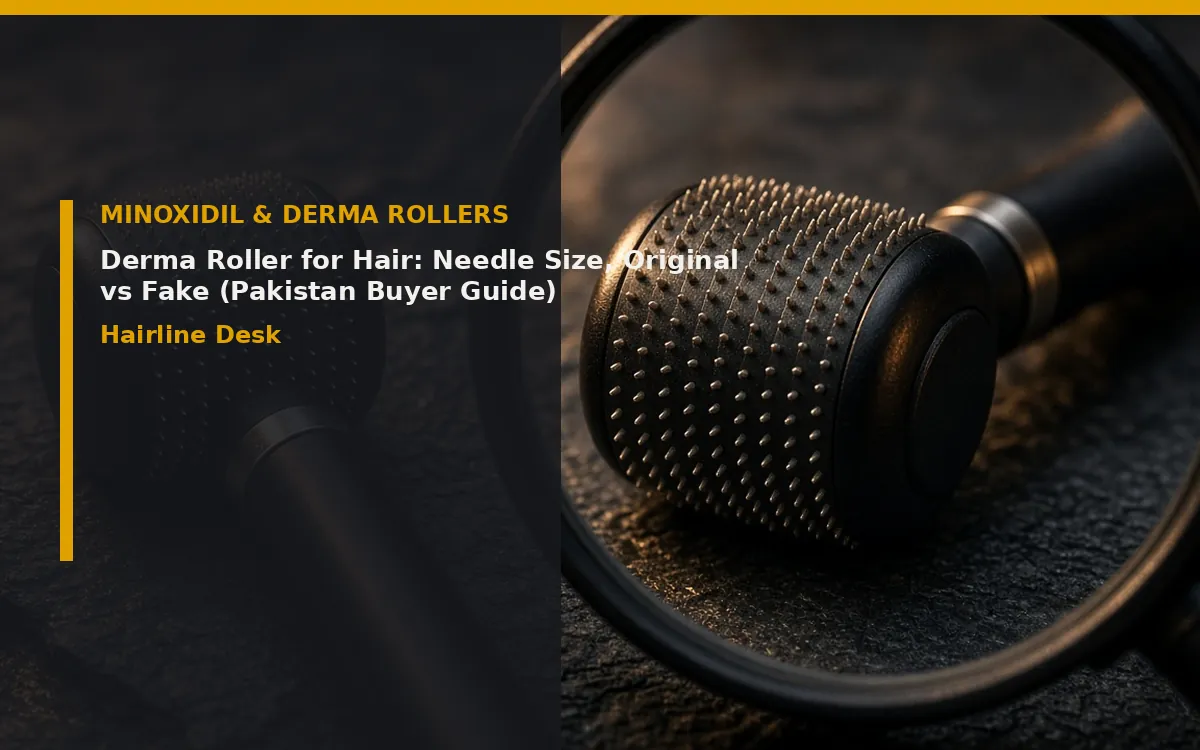
- Needle count: 540-needle rollers are a common design for the scalp. The count affects how dense the punctures are on each pass.
- Material: stainless steel or titanium. What matters most is that the needles are sharp, straight and sterile.
- Head size: a smaller head is easier to use on the hairline and beard.
Original vs fake: how to buy safely in Pakistan
Rollers are cheap to make and easy to fake, and a poor roller can tear the skin rather than puncture it cleanly.
- Buy from a traceable seller, with a clear brand, contact details and a returns policy.
- Check the packaging: sealed, with the needle length clearly printed.
- Inspect before first use: needles should be straight and evenly spaced, with none missing or bent.
- Be wary of rollers sold loose or with no case.
- Never buy second-hand, and never share a roller.
How to roll safely
- Wash your hands. Start with a clean, dry scalp.
- Disinfect the roller and the area, using an antiseptic suitable for skin.
- Roll gently in short strokes: forwards and back, side to side, then diagonally. Lift between directions rather than dragging.
- Light pressure only. Mild redness is expected. Bleeding means you are pressing too hard or the needles are too long.
- Apply any topical treatment only as your product's directions or your doctor advise.
- Clean the roller, let it air dry and store it in its case.
- Avoid sun, sweat, swimming and harsh products for the rest of the day.
How often?
The frequency depends on needle length and your skin. Shorter needles are used more often, and longer needles much less often, so the skin can heal in between. Follow the instructions for your roller or your dermatologist's advice. More often is not better. Constant irritation can cause harm.
When to replace the roller
Needles go blunt and can bend. Replace the roller when the needles look damaged, or at the interval the manufacturer recommends, and immediately if it is dropped onto a hard surface.
Who should avoid derma rolling
- Anyone with active acne, cuts, sunburn, eczema, psoriasis, dandruff flare-ups or a scalp infection in the area
- People on blood thinners, or with bleeding disorders or poorly controlled diabetes, unless a doctor approves
- People prone to keloid scars
- Anyone with skin irritated after shaving (for the beard)
A kit that bundles serum and roller
If you want a ready-made routine, our featured kit puts a hair serum, an "Anti Septic for Prep" spray and a 540-needle stainless-steel roller with case in one box, with cash on delivery across Pakistan. We are still confirming the needle length, and we'll publish it on the product page. The serum contains minoxidil 5%, biotin, D-Panthenol, wheat protein and ethanol: results usually take 3–6 months, early shedding is possible, it's not for pregnant or breastfeeding women, and you should consult a doctor before use. It is not a cure. Read the label in the kit and follow the hygiene steps above. It contains minoxidil 5%, which may help some people with pattern thinning over 3–6 months; early shedding is possible, it is not a cure, and it is not for pregnant or breastfeeding women. Consult a doctor first. It is not a treatment for baldness.
See a dermatologist if…
- You're considering needles longer than those meant for home use
- Your scalp bleeds, stays red for days, swells or develops pus
- You have any scalp condition or take blood thinners
- You want to combine rolling with prescription treatments
Bottom line
A derma roller can be a useful addition to a hair routine, particularly alongside minoxidil, but technique and hygiene matter more than any brand. Choose a sensible needle length, buy from a seller you can trace, roll gently, never share it, and keep your expectations realistic. See our 90-day routine for how to fit it in.
General information only, not medical advice. See a dermatologist for hair loss or scalp conditions.