Ganjapan Ka Ilaj: What Works for Genetic Hair Loss in Men
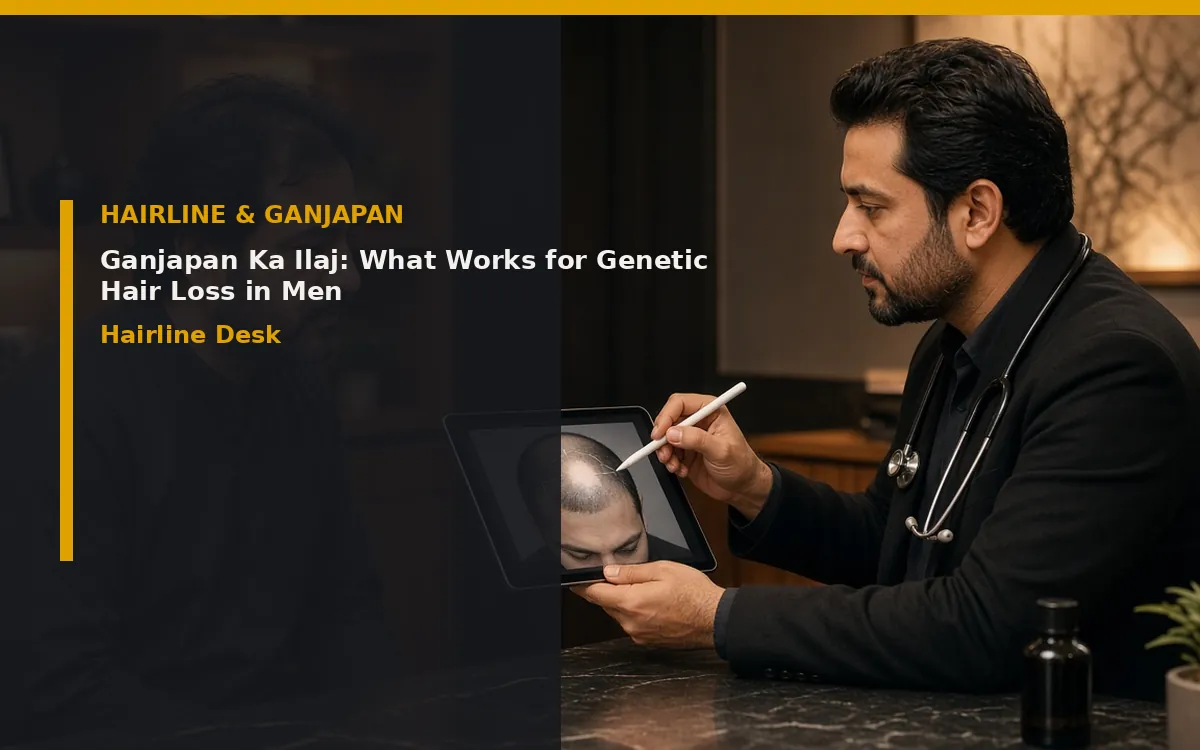
Short answer: genetic ganjapan (male pattern hair loss, or androgenetic alopecia) can't be cured, but it can often be slowed and sometimes partly reversed. The treatments with the strongest evidence are topical minoxidil, oral finasteride (prescription only) and, for established baldness, hair transplant surgery. Oils, shampoos and totkay do not change the underlying process.
If you are a man in Pakistan searching "ganjapan ka ilaj" at 2am after noticing your temples in the bathroom mirror, you are in very large company. A 2023 survey in Karachi found that around three in four respondents reported some hair loss. Most male hair loss is genetic, and the good news is that it is one of the most studied conditions in dermatology. This guide covers what actually helps.
What genetic ganjapan actually is
Your hair grows in cycles. Each follicle grows a hair for a few years, rests, sheds it and starts again. In male pattern hair loss, follicles on the top and front of the scalp are sensitive to a hormone called DHT (dihydrotestosterone). Over years, DHT makes those follicles shrink, a process called miniaturisation. Each cycle produces a thinner, shorter, lighter hair until the follicle eventually stops producing visible hair.
This is why ganjapan looks the way it does. The temples recede into an M-shape, the crown thins in a circle, and the sides and back stay thick. Those side and back follicles are not sensitive to DHT, which is also why hair transplants use them.
Two things follow from this biology:
- It is gradual. Most men lose hair over years, not weeks. Sudden heavy shedding is usually something else (see the dermatologist section below).
- It is driven from inside the follicle. Anything applied only to the hair shaft (oil, conditioner, most shampoos) cannot change DHT sensitivity.
Treatments with real evidence
1. Topical minoxidil
Minoxidil is applied to the scalp as a liquid or foam, usually 5% for men. It prolongs the growth phase and can thicken miniaturised hairs. It has decades of trial data behind it.
- It works best on the crown and mid-scalp. Results on a receding front hairline are less reliable.
- Expect an increase in shedding in the first weeks. This "dread shed" is usually a sign the cycle is resetting.
- Judge it at six months, not six days.
- If you stop, the gains are lost over the following months.
2. Oral finasteride (prescription)
Finasteride lowers DHT production. In trials it stopped further loss in most men and produced some regrowth in many. It is a prescription medicine for a reason. Side effects, including sexual side effects and mood changes, are reported in a minority of men and should be discussed with a doctor before you start. Do not buy it on someone's advice in a WhatsApp group.
3. Combination approaches
Dermatologists often combine minoxidil with finasteride, and sometimes add ketoconazole shampoo or in-clinic procedures. Microneedling (derma rolling) alongside minoxidil has some promising small studies. We cover it in our derma roller buyer guide.
4. Hair transplant
For areas that are already smooth and bald, no lotion will bring the follicles back. A transplant moves DHT-resistant follicles from the back of the head to the front. Results depend heavily on the surgeon and on keeping your remaining native hair through medical treatment. Choose qualified surgeons and ask who actually performs each step of the procedure.
What doesn't work (but is sold as if it does)
- "Ganjapan ka ilaj oil". Oils can reduce breakage and make hair look healthier, but they don't reverse miniaturisation. Our sister site's fact-check on oils goes into detail, and our myths article covers the rest.
- Biotin and "hair tablets" without a deficiency. True biotin deficiency is rare. Supplements help only if you lack something, and a doctor can test for that.
- Shampoos that promise regrowth. Shampoo is on your scalp for two minutes. Its job is cleaning.
- Anything that promises results in 15 days. Hair grows about one centimetre a month. Honest treatments are judged in months.
A practical plan if you are noticing early thinning
- Take photos now. Front, top and crown, under the same light, every month. Memory is unreliable. Our 90-day routine has a template.
- Rule out other causes. If shedding is sudden, or you have been ill, crash-dieted or very stressed, the cause may be temporary.
- See a dermatologist. They can confirm the pattern, often just by examining the scalp with a dermatoscope, and discuss minoxidil and finasteride with you.
- Be consistent for six months before deciding anything works or doesn't.
- Stop tight caps and harsh styling that cause breakage and make thinning look worse.
Cost reality in Pakistan
Prices change frequently and differ between cities and pharmacies, so we won't quote exact figures that will be out of date next month. In general, a month of topical minoxidil is the lowest ongoing cost, a dermatologist consultation is a one-off fee, oral finasteride is relatively inexpensive but needs a prescription, and transplants are the largest one-time cost, with wide variation between clinics. Budget for the long term. Treatments for genetic hair loss are ongoing.
Ganjapan and confidence
Hair loss affects how many men feel, especially in their twenties, when it often begins. It is a medical condition, not a character flaw. Shaving it short is also a perfectly valid choice. Plenty of men decide that a clean buzz cut suits them better than years of treatment, and that is as valid as any medicine.
See a dermatologist if…
- Your hair is falling out suddenly or in clumps
- You have round, smooth bald patches (this may be alopecia areata, which is treated differently)
- Your scalp is itchy, red, scaly, painful or has pus
- You are under 18, or the loss is very rapid
- You are considering finasteride or any prescription treatment
- You have other symptoms, such as tiredness, weight change or skin changes
Bottom line
Ganjapan ka ilaj is not one product. It is understanding that genetic hair loss is gradual and hormonal, and that the best-evidenced options are minoxidil, finasteride under medical care, and surgery for bald areas. Starting early, staying consistent and keeping expectations realistic matter more than any brand name.
General information only, not medical advice. See a dermatologist for hair loss or scalp conditions.